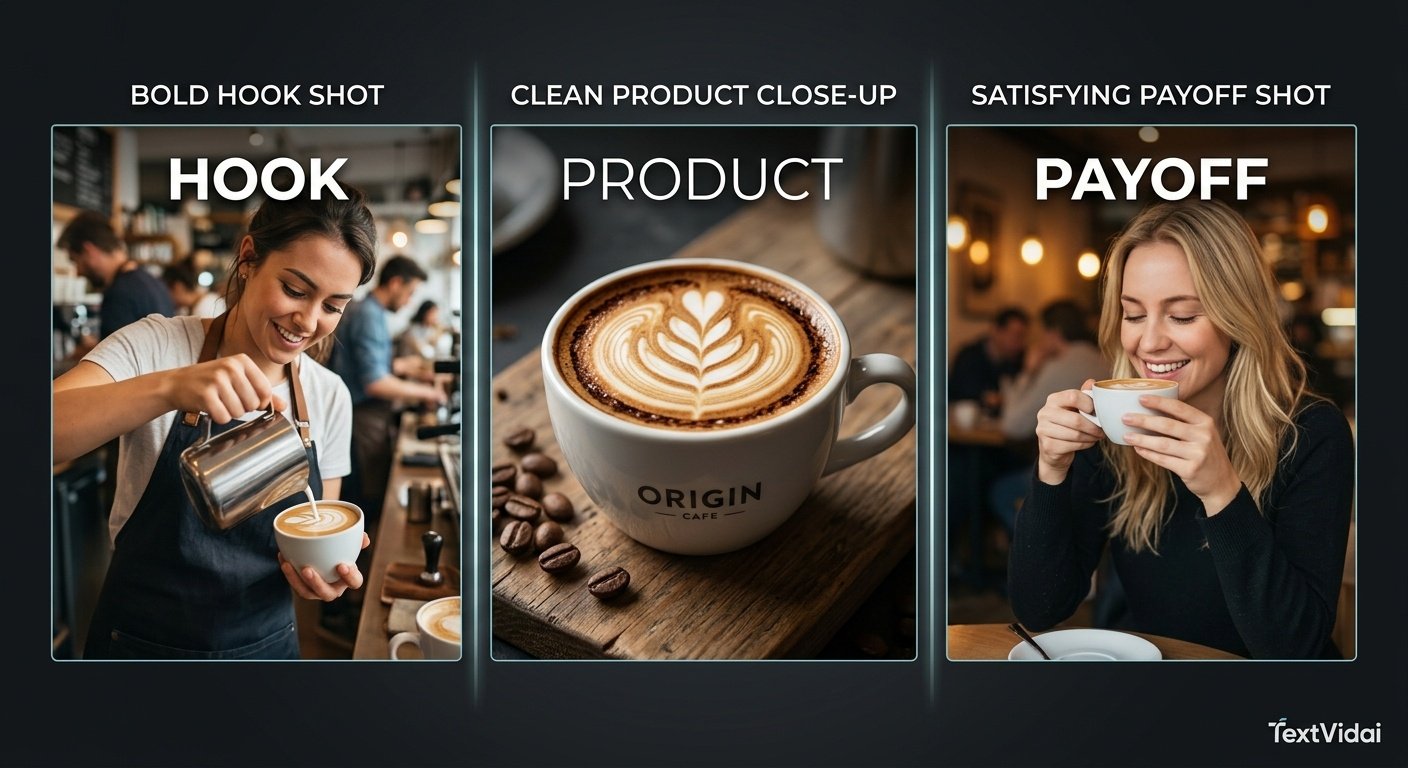
A product ad only has a few seconds to earn attention before someone scrolls past. AI product ads make it possible to test multiple visual styles, angles, and hooks quickly, without booking a studio or a film crew. This guide walks through exactly how to structure an AI product ad that holds attention and drives action, including prompt examples you can copy and adapt with an AI video generator like TextVidai.
What Makes a Product Ad "Convert"?
A converting ad isn't just visually appealing it moves someone from noticing to acting. That usually comes down to four things:
A strong hook in the first 1-2 seconds that stops the scroll
A clear view of the product so viewers instantly understand what's being sold
A reason to want it a benefit, transformation, or emotional payoff
A clear next step, whether that's a caption CTA, a link, or an on-screen prompt
AI-generated video can help with all four, but only if the prompt is written with these goals in mind rather than just "make a nice video of my product."
The AI Product Ad Formula
A simple structure works better than trying to cram everything into one shot. Think of your ad in three beats:
1. Hook shot – something visually striking that stops the scroll 2. Product shot a clear, well-lit view of the product itself 3. Payoff shot – the result, use case, or transformation the product delivers
You can generate each beat as a separate clip and combine them, or focus on a single strong shot if you're testing quickly. Either way, the same prompt principles apply:
Subject + Action + Environment + Camera + Lighting + Style + Mood
Step 1: Start With the Hook
The hook doesn't have to feature the product yet it just needs to be visually interesting enough to stop a scroll. Movement, color, and a strong opening angle all help.
Example hook prompt:
A dramatic close-up shot of water droplets splashing in slow motion against a bold colored background, dynamic camera shake, high-contrast studio lighting, energetic attention-grabbing style.
Step 2: Show the Product Clearly
Once you have attention, the next 2–3 seconds should make it obvious what's being sold. Avoid overly abstract or artistic shots here clarity beats style at this stage.
Example product shot prompt:
A clean rotating close-up shot of [product] on a minimalist pedestal, soft studio lighting with subtle reflections, sharp focus, modern commercial style.
Example lifestyle-context prompt:
A close-up shot of hands using [product] in a real-world setting, natural window lighting, shallow depth of field, authentic everyday atmosphere.
Step 3: Deliver the Payoff
This is where the ad answers "why should I care?" a transformation, a satisfying result, or the product in its ideal moment of use.
Example payoff prompt:
A satisfying slow-motion shot showing the finished result of using [product], warm natural lighting, smooth camera pull-back to reveal the full scene, rewarding and polished mood.
10 AI Product Ad Prompt Ideas by Category
Beauty & Skincare
1. A macro close-up shot of a serum dropper releasing a single drop onto skin, soft diffused lighting, clean minimal background, luxurious skincare commercial style.
Fashion & Apparel
2. A model turning slowly to show a jacket's fit and movement, studio lighting with soft shadow, high-fashion editorial style, confident mood.
Food & Beverage
3. A slow-motion pour of a beverage into a glass with condensation forming, warm lighting, close focus on texture and color, refreshing commercial style.
Tech & Gadgets
4. A clean 360-degree rotation of a device on a reflective dark surface, cool studio lighting, sharp modern commercial style, precise and premium mood.
Home & Lifestyle
5. A cozy close-up shot of a candle burning on a wooden table, soft warm light flickering, shallow depth of field, relaxed inviting mood.
Fitness & Wellness
6. A dynamic shot of fitness equipment in use during a workout, energetic camera movement, bright natural gym lighting, motivating athletic mood.
Jewelry & Accessories
7. A macro rotating shot of a ring under studio spotlighting, sparkling reflections, dark background, elegant premium commercial style.
Pet Products
8. A playful medium shot of a dog interacting with a toy, natural daylight, warm candid tone, joyful lifestyle mood.
Subscription Boxes
9. An overhead unboxing shot revealing neatly packed items inside a box, soft natural lighting, satisfying reveal-style pacing, warm inviting mood.
Software & Apps
10. A clean close-up shot of a smartphone screen showing an app interface in use, soft ambient lighting, smooth interface animation, modern tech style.
Common Mistakes That Hurt Conversion
Starting too slow. If the first shot doesn't grab attention, most viewers won't reach the product shot at all.
Being too vague about the product. A prompt like "a nice product video" gives the AI model too little to work with — name the product type, material, and setting.
Ignoring platform format. Vertical framing works better for Reels, Shorts, and TikTok; horizontal suits YouTube or a website hero video.
Skipping the payoff. Showing the product without showing why it matters often leaves viewers uninterested in acting.
Using one version only. Small changes in lighting, pacing, or camera movement can noticeably shift how an ad performs, so testing more than one version is usually worth it.
Turning Your Ad Concept Into a Finished Video
Once you have your hook, product, and payoff shots planned, you can generate AI videos from text by entering each prompt into TextVidai and choosing from multiple AI video models to compare results. If you want inspiration before writing your own prompts, the AI-generated video examples on the showcase page show a range of finished product-style clips.
If you're planning to test several ad variations regularly, it's worth checking TextVidai pricing to find a plan that matches how often you'll be generating new content.
Frequently Asked Questions About AI Product Ads
What makes an AI product ad convert?
A converting ad typically has a strong opening hook, a clear view of the product, a reason to want it, and an obvious next step. Prompts written with these goals in mind tend to produce more effective results than generic descriptions.
How do I write a prompt for an AI product ad?
Describe the product clearly, along with the action, setting, camera angle and movement, lighting, and mood. Breaking the ad into a hook, product shot, and payoff often produces a more structured result than one long prompt.
Should AI product ads be vertical or horizontal?
Vertical framing generally performs better on Reels, TikTok, and Shorts, while horizontal framing suits YouTube ads or website hero videos. Choose based on where the ad will actually run.
How long should an AI product ad be?
Most short-form product ads perform best between 6 and 20 seconds, long enough to include a hook, product view, and payoff without losing attention.
Can AI product ads work for any type of product?
Yes, though the best results usually come from being specific about the product's material, use case, and setting in the prompt rather than relying on generic descriptions.
Where can I create AI product ads?
An AI video generator such as TextVidai can turn prompts like the ones above into finished product ad clips, with access to multiple AI video models.
Conclusion
AI product ads that convert usually follow the same structure as any effective ad: a hook that earns attention, a clear look at the product, and a payoff that gives someone a reason to act. With the prompt formula and examples above, you have a repeatable starting point to test different products and styles. When you're ready, you can use TextVidai to turn your ad concept into a finished AI-generated video.